
Crate Training for Dogs: Safety, Structure, and How It Supports Your Dog’s Well-Being
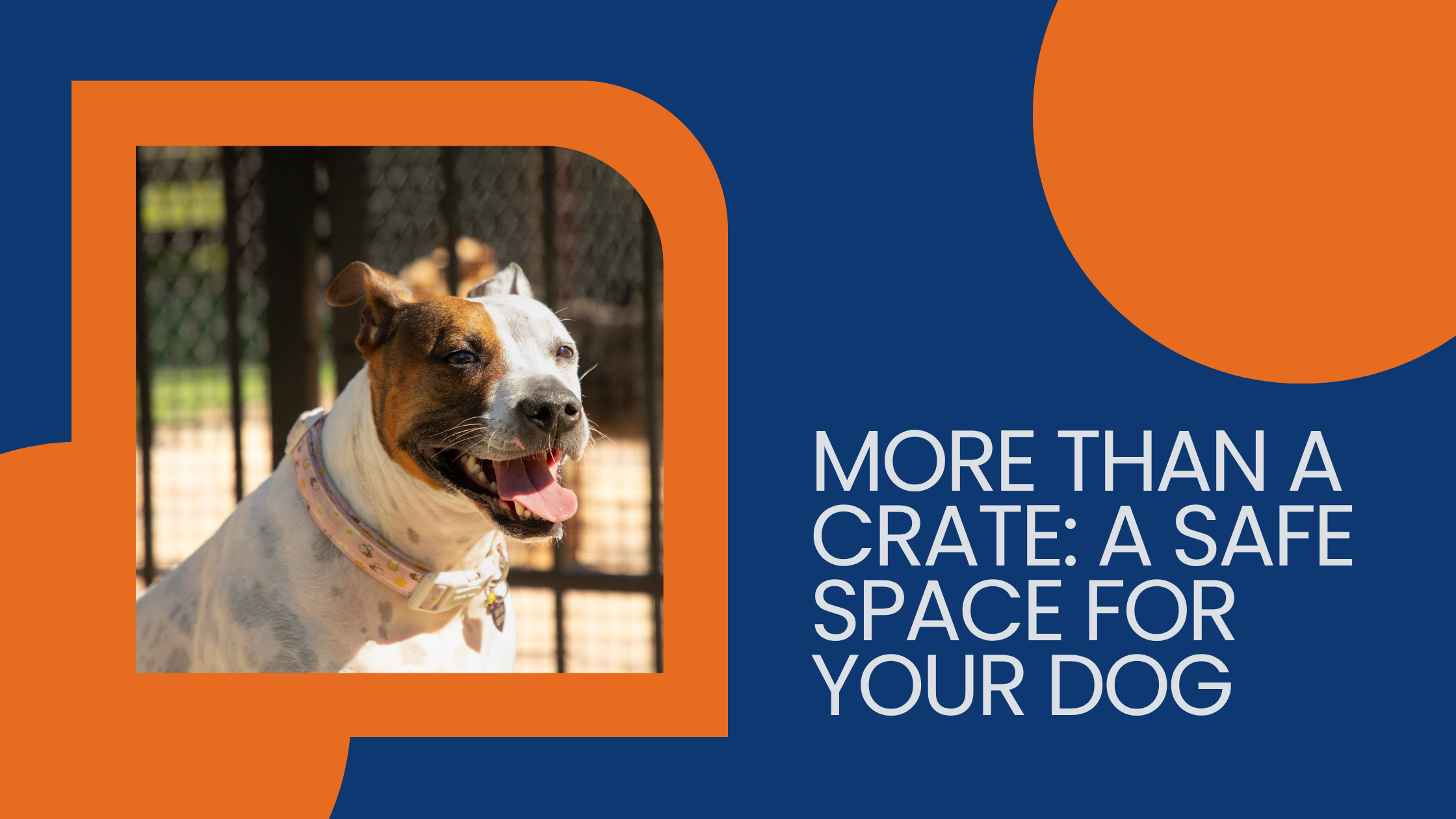
Blue and orange banner featuring a photo of a happy dog with a white and brown face, panting and wearing a collar, standing in a fenced outdoor area. The text reads: “More Than a Crate: A Safe Space for Your Dog.”
Crates can sometimes be misunderstood. For some pet parents, they feel unfamiliar—or even unnecessary—especially if their dog has never used one at home.
At Jazz’s Wonderland, we understand that every dog comes with a different background, routine, and comfort level. But in a professional daycare and boarding environment, crates play an essential role—not just in logistics, but in safety, emotional regulation, and training.
When used correctly, a crate isn’t a limitation.
It’s a tool for support, structure, and well-being.
The Role of Crates in Safety
In a group environment, safety is always the top priority—for your dog, for other dogs, and for our team.
Crates help us maintain that safety in several important ways:
• Preventing overstimulation and escalation
Even friendly, social dogs can become overwhelmed when exposed to constant activity. Without breaks, this can lead to:
Increased stress
Poor impulse control
Tension between dogs
Crates allow dogs to step away before stress builds up, preventing situations rather than reacting to them.
• Safe transitions between activities
Daycare and boarding involve movement—dogs arriving, leaving, rotating between play groups, grooming, feeding, and rest.
Crates provide a secure space during transitions, reducing:
Door-dashing risks
Accidental escapes
Overexcitement during high-energy moments
• Individual safety during feeding and rest
Dogs should always be able to eat and rest without pressure from other dogs.
Crates ensure:
Safe, undisturbed meals
Proper digestion time
Protection for dogs who may guard food or feel anxious around others
• Monitoring health and behavior
Crate time also allows our team to observe:
Appetite
Energy levels
Signs of stress or discomfort
This helps us catch small changes early and adjust care when needed.
Crates as a Training and Life Skill
Crate comfort is more than just a daycare tool—it’s a life skill that can benefit dogs in many real-world situations.
Dogs who are comfortable in crates tend to handle:
Vet visits
Grooming appointments
Travel (car or plane)
Emergency situations
with less stress and more confidence.
Crate training helps dogs learn:
✔ How to settle independently
✔ How to regulate their energy
✔ How to feel safe in a defined space
These are foundational skills that support a dog’s overall emotional health.
Supporting Different Types of Dogs at Daycare
One of the most important parts of our approach is recognizing that not all dogs arrive with the same experience.
Dogs already comfortable with crates
These dogs usually:
Settle quickly
Understand rest routines
Transition easily between play and downtime
For them, crate time feels familiar and predictable.
Dogs new to crates
For dogs who have never used a crate, our approach is slow, positive, and observational.
We focus on:
✔ Gradual introduction
We don’t rush the process. Dogs are given time to explore and adjust.
✔ Positive associations
Crate time is paired with:
Treats or meals
Calm energy
Comfortable surroundings
✔ Short, manageable sessions
We build tolerance step by step, rather than expecting immediate comfort.
✔ Reading body language
We watch closely for signs of stress and adjust accordingly.
Building Trust Through Routine and Pack Behavior
Dogs learn not only from us—but from each other.
In a daycare setting, it’s very common to see:
One dog settle → others follow
Calm energy spread through the group
Rest becoming part of the shared routine
This pack influence helps new dogs feel more secure and understand that crate time is normal—not something to fear.
How to Introduce Crates at Home (The Right Way)
If your dog isn’t used to a crate, introducing one at home can be incredibly beneficial—and it doesn’t have to be stressful.
Here’s how to do it in a positive, effective way:
✔ Make it inviting
Place the crate in a familiar area and add:
Soft bedding
A favorite toy
A safe chew
Keep the door open at first.
Let your dog explore freely
Allow your dog to go in and out on their own. Curiosity is the first step.
Use food as a positive association
Feed meals near or inside the crate. You can also:
Toss treats inside
Use puzzle toys in the crate
Start with short durations
Close the door for a few minutes at a time while your dog is calm—and gradually increase duration.
Keep the experience calm
Avoid using the crate only when leaving the house or during stressful moments. It should feel like a normal, safe place—not a signal that something negative is happening.
Why Crate Training Benefits Your Dog Long-Term
When introduced properly, crate training supports:
• Emotional security
Dogs feel safer when they have a defined, predictable space.
• Better rest quality
Dogs sleep more deeply and recover better when they have quiet, uninterrupted rest.
• Reduced anxiety
A familiar “safe zone” helps dogs cope with new environments and situations.
• Improved behavior
Balanced rest leads to better impulse control and more positive interactions.
Our Philosophy at Jazz’s Wonderland
We don’t use crates as a default—we use them as a tool, thoughtfully and intentionally.
Our commitment is to:
Observe each dog individually
Adjust based on their comfort level
Communicate openly with pet parents
Prioritize emotional well-being at every step
If a dog struggles, we don’t push—we adapt.
Because real care isn’t about making dogs fit a system.
It’s about creating a system that supports each dog.
Crates Are Not About Confinement—They’re About Care
When used with intention, patience, and understanding, crates become:
· A place of rest
· A tool for safety
· A support for emotional balance
· A foundation for lifelong skills
At Jazz’s Wonderland, every decision we make is centered around one goal:
Helping your dog feel safe, understood, and truly cared for.
If you have questions about crate training or how your pup adjusts during their stay, we’re always here to guide you.