
Socialization and Overall Well-Being
Blue textured banner featuring three polaroid-style photos of dogs interacting and playing together in an outdoor daycare setting. The photos show small group social interactions between dogs of different breeds and sizes. On the right side, black paw print graphics appear beside the text: “Dog Socialization — More Than Just Play.”
Socialization is not just a behavioral concept—it’s directly tied to a dog’s emotional, mental, and even physical health.
A dog that experiences healthy, structured socialization is more likely to be:
· Emotionally stable
· Confident in new environments
· Able to handle change and novelty
· Less prone to anxiety and reactivity
· Better at self-regulation
On the other hand, poor or overwhelming social experiences can lead to:
Chronic stress
Fear-based behaviors
Difficulty adapting to new situations
Increased reactivity or avoidance
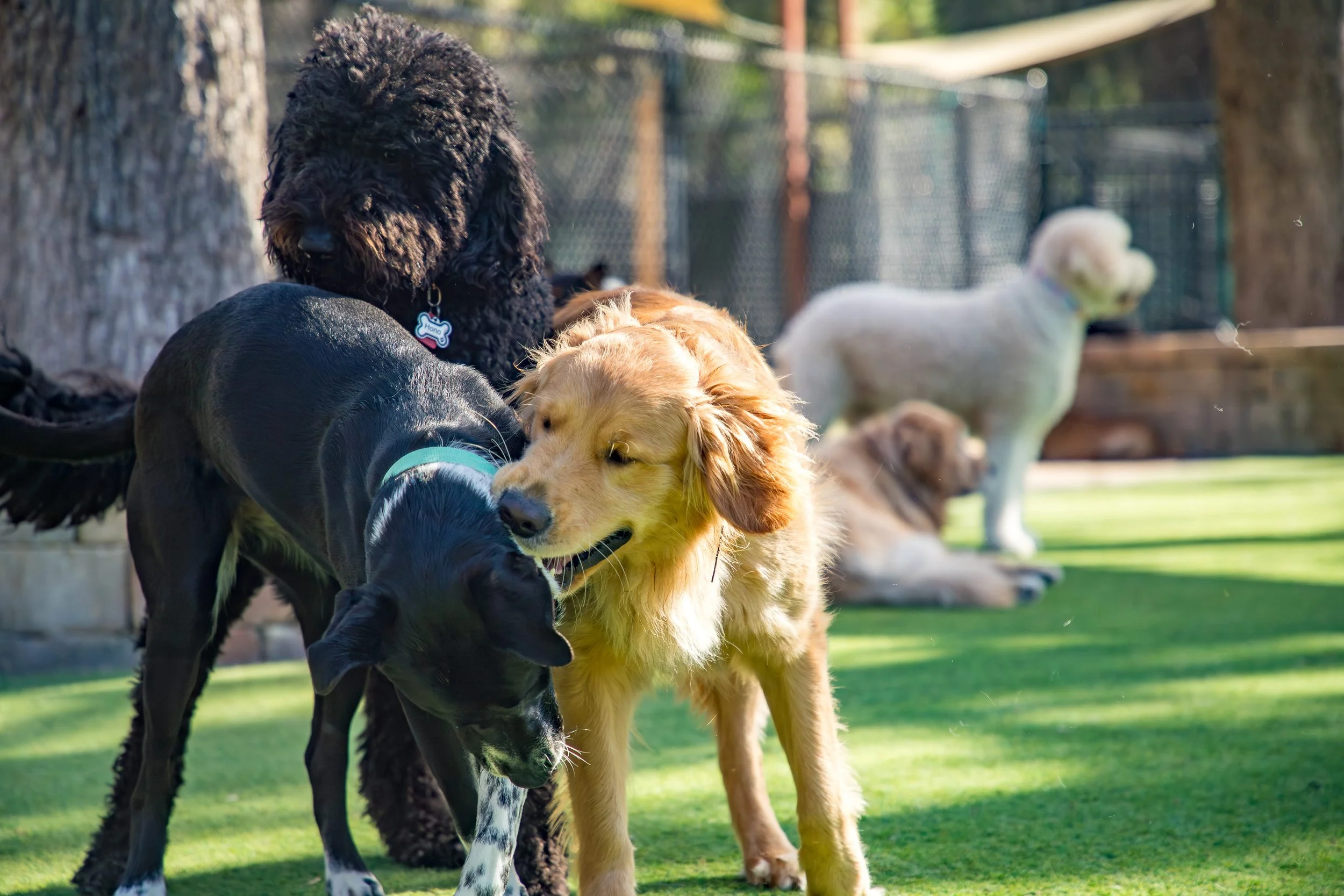
Several dogs of different breeds interact calmly in an outdoor daycare play area with artificial grass and fenced surroundings. In the foreground, a black dog and a golden retriever greet each other while a curly black dog stands nearby. Additional dogs rest and observe in the background, illustrating supervised socialization and relaxed group interaction.
Socialization shapes how a dog interprets the world.
It influences:
How they respond to other dogs
How they handle new people and environments
How they recover from stress
How they regulate excitement
In other words:
Socialization is not just about interaction
It’s about building resilience
Supporting Different Types of Dogs at Daycare
At Jazz’s Wonderland, we recognize that dogs arrive with very different social backgrounds.
And that matters.
Dogs Already Comfortable with Socialization
These dogs often:
Engage easily with others
Understand play signals
Recover quickly from stimulation
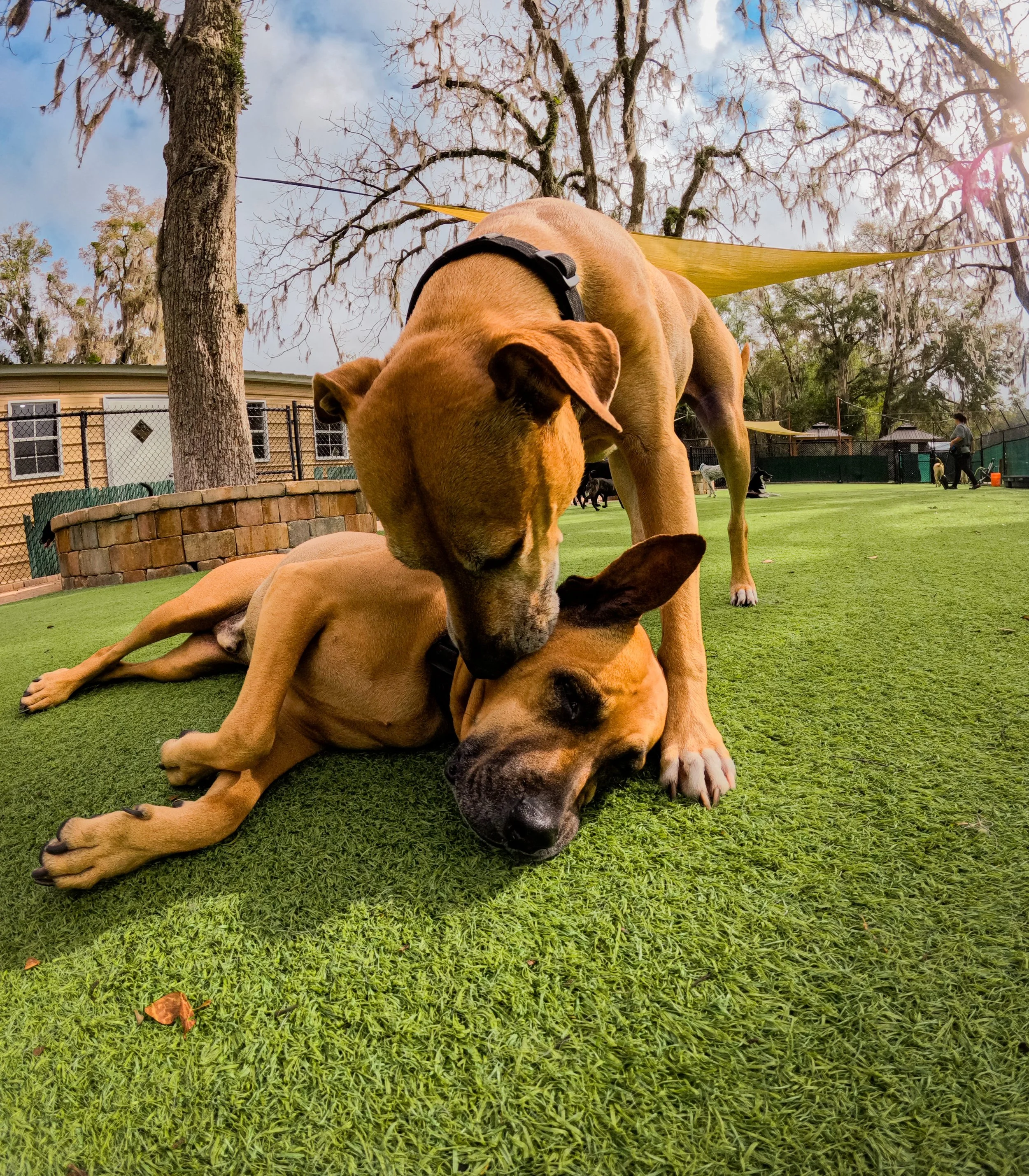
Two large brown dogs interact calmly in an outdoor daycare play area with artificial grass and shaded spaces. One dog lies relaxed on the ground while the other stands over it in a gentle, playful posture, demonstrating appropriate social behavior and supervised dog interaction.
But even social dogs still need structure.
Without it, they can:
Become overstimulated
Develop poor play habits
Lose the ability to self-regulate
For these dogs, our focus is:
· Maintaining balance
· Reinforcing appropriate interactions
· Ensuring they take breaks—not just play continuously
Because even confident dogs need guidance.
Several dogs of different breeds and sizes run and play together in a fenced outdoor daycare yard with artificial grass. A tan dog and a small black dog move side by side in the foreground while other dogs socialize and explore calmly
Dogs with Limited or No Social Experience
These dogs require a very different approach.
They may:
Feel unsure or cautious
Become overwhelmed quickly
Avoid interaction—or react defensively
For these dogs, socialization is not about immediate interaction—it’s about gradual exposure and trust-building.
We focus on:
· Controlled environments
· One-on-one or small group introductions
· Calm, neutral dogs as role models
· Observing body language closely
· Allowing space and choice
Sometimes, the most important step is simply:
Being near other dogs without pressure to interact
That alone can build confidence.
Socialization Is About Pacing
One of the most important concepts in socialization is pace.
Too much, too fast = overwhelm
Too little = missed learning opportunities
The right balance allows dogs to:
Process experiences
Build positive associations
Feel in control of their environment
This is especially important for:
Puppies
Newly adopted dogs
Sensitive or anxious dogs
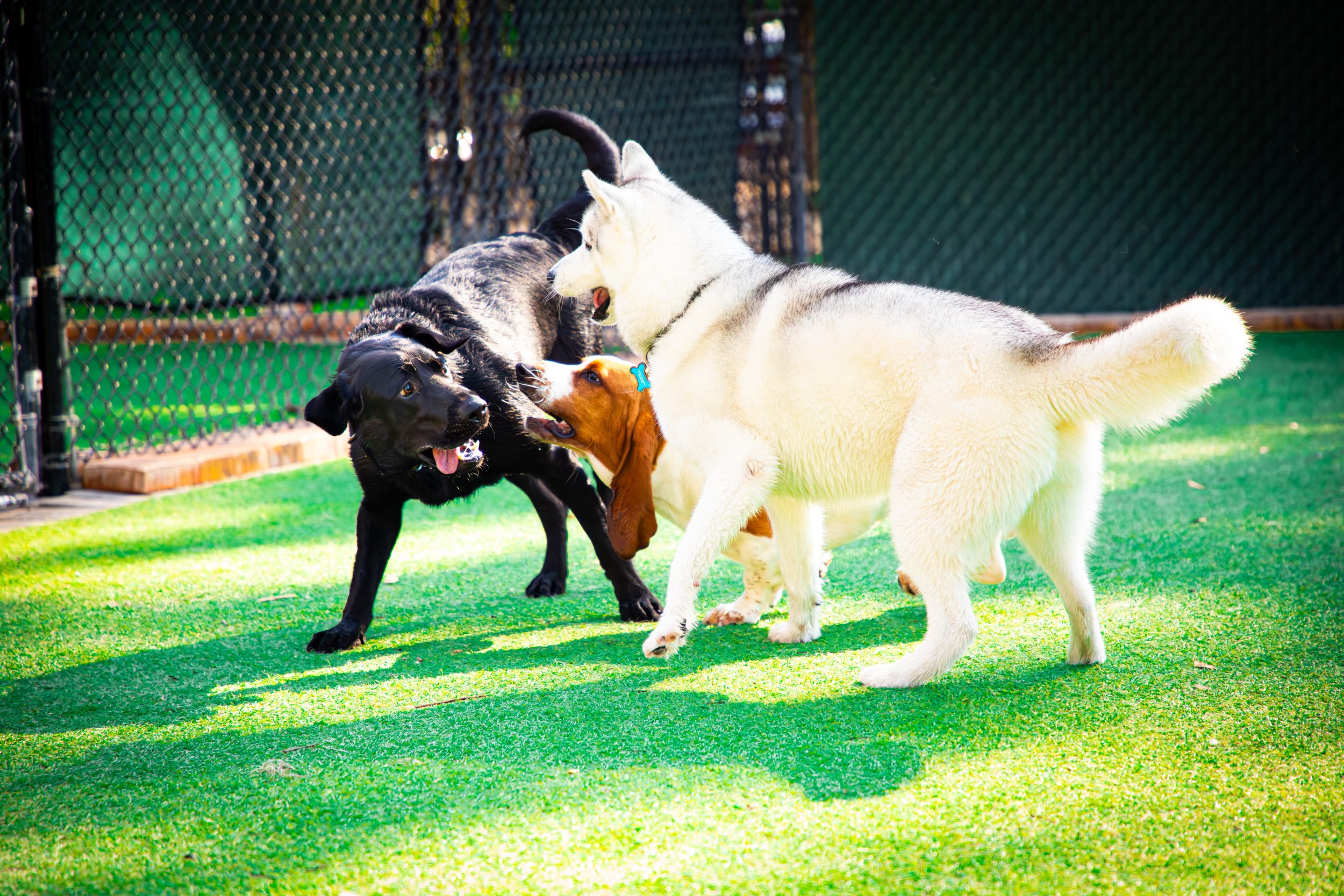
Three dogs of different breeds interact playfully in a supervised outdoor daycare area with artificial grass and fenced surroundings. A black dog, a white husky, and a brown-and-white hound engage in relaxed social play, displaying open body language and friendly interaction in a structured group setting.
Good socialization respects the dog’s emotional capacity—not just their physical energy.
How to Introduce Your Dog to Others (The Right Way)
For pet parents, the way introductions happen matters more than the number of interactions.
Start small and controlled
Avoid large, chaotic environments at first.
Choose the right dog
Look for calm, well-socialized dogs—not overly intense or reactive ones.
Focus on neutral interactions
Dogs don’t need to play immediately. Walking together or simply being near each other is valuable.
Watch body language
Healthy signs include:
Loose posture
Curiosity without tension
Ability to disengage
End on a positive note
Short, successful interactions are far more beneficial than long, overwhelming ones.
Why Socialization Benefits Everyone
When dogs are properly socialized, the impact goes beyond the individual dog.
For your dog:
Increased confidence
Reduced anxiety
Better adaptability
Safer interactions
For other dogs:
More predictable behavior
Safer group dynamics
Less conflict
For pet parents:
More enjoyable outings
Less stress in public environments
Greater trust in your dog’s behavior
For the environment (daycare, parks, community):
Safer shared spaces
More balanced group interactions
Reduced risk of incidents
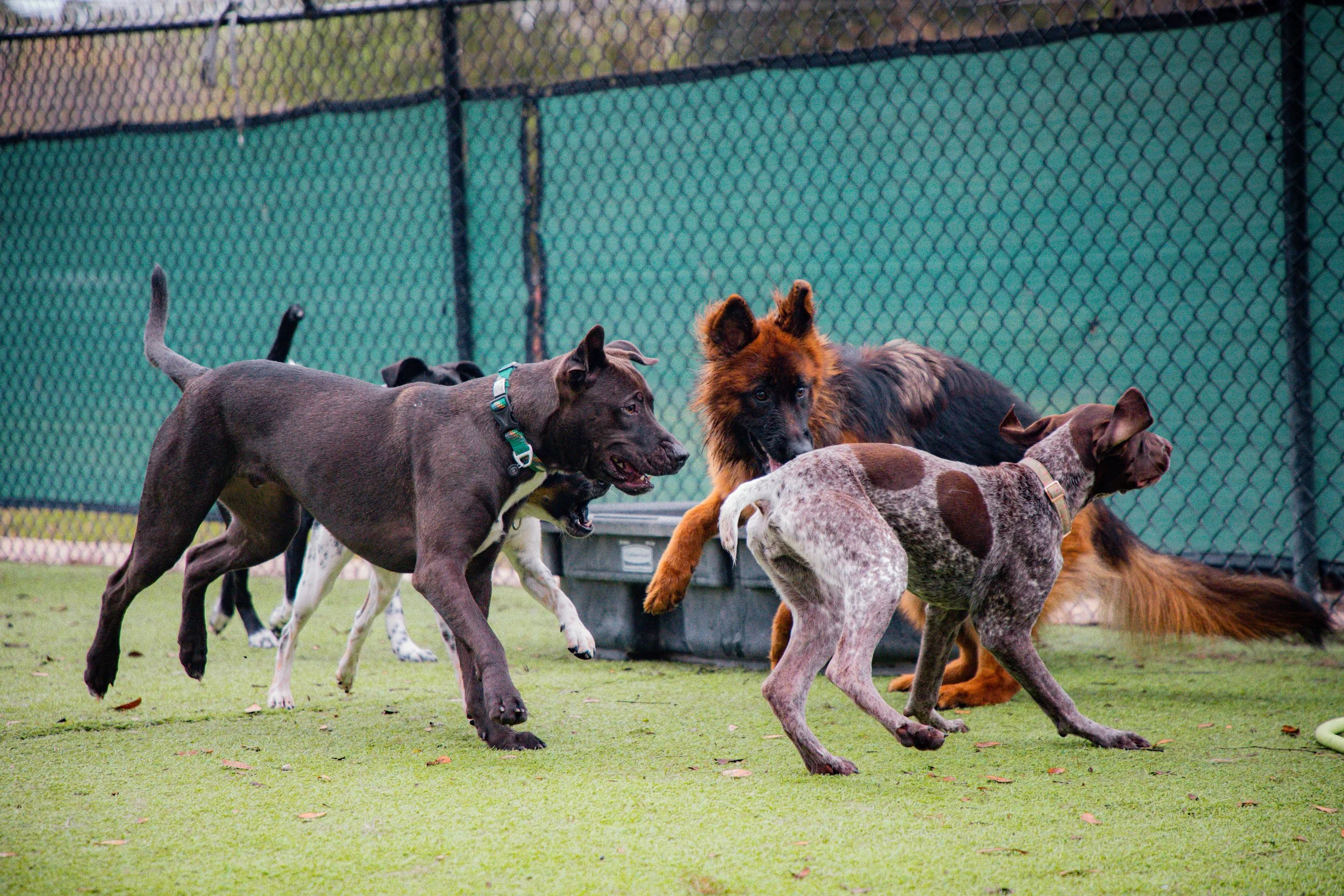
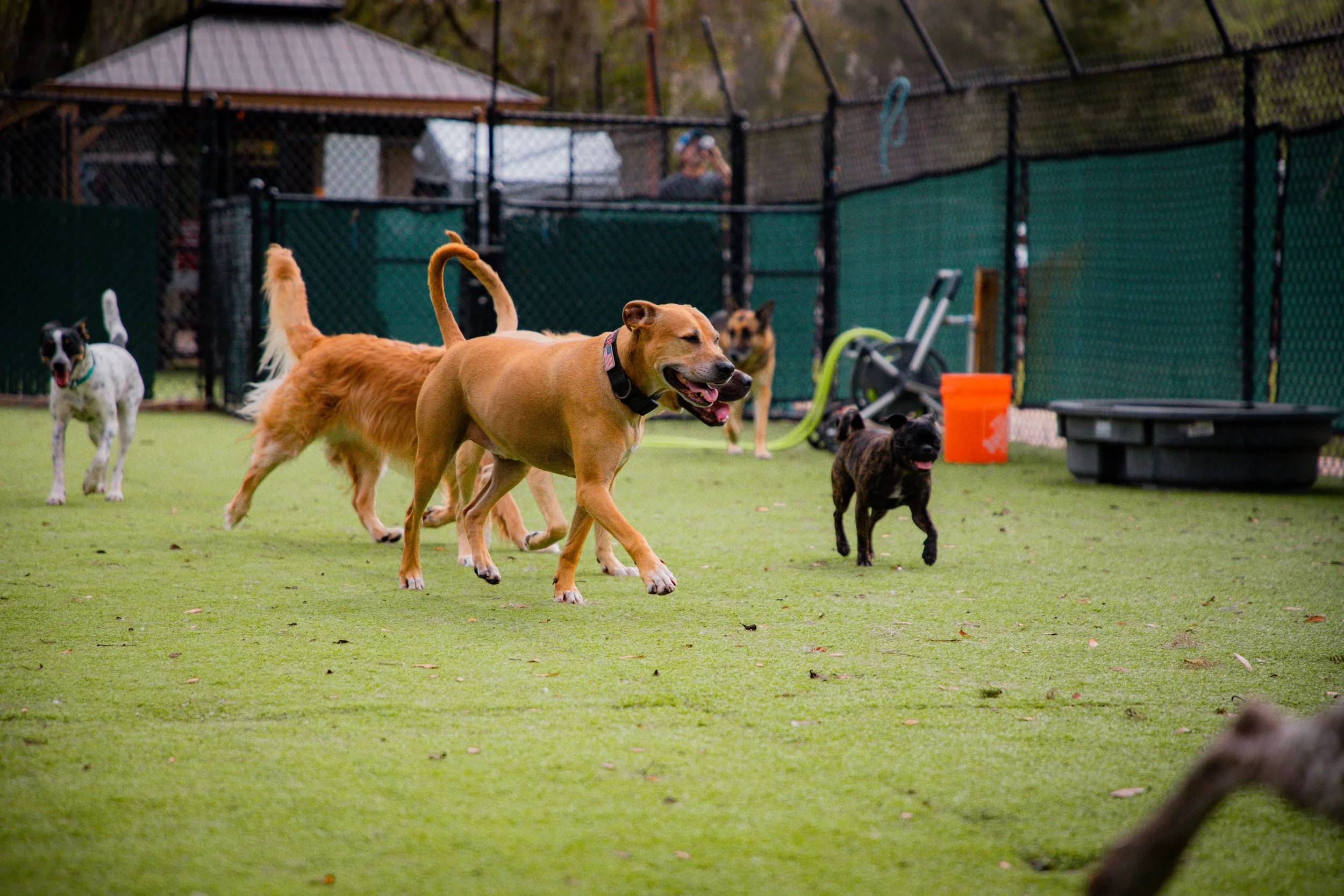
Group of dogs of various breeds and sizes interacting in a supervised outdoor daycare play area with artificial grass and fenced surroundings. Several dogs are calmly sniffing, observing, and moving around each other while a golden-colored dog walks in the foreground, illustrating structured socialization and group play.
Socialization as a Foundation for Life
Socialization is not a one-time phase—it’s an ongoing process.
Dogs continue learning throughout their lives, and every experience shapes them.
When done correctly, socialization becomes:
· A foundation for confidence
· A tool for emotional balance
· A pathway to safer interactions
· A support system for lifelong well-being
Final Thought: Socialization Should Feel Like Support
At Jazz’s Wonderland, we don’t measure success by how many dogs are playing together.
We measure it by:
How dogs feel
How they recover
How they grow over time
Because real socialization isn’t about exposure—
It’s about helping dogs feel safe enough to learn, connect, and thrive.