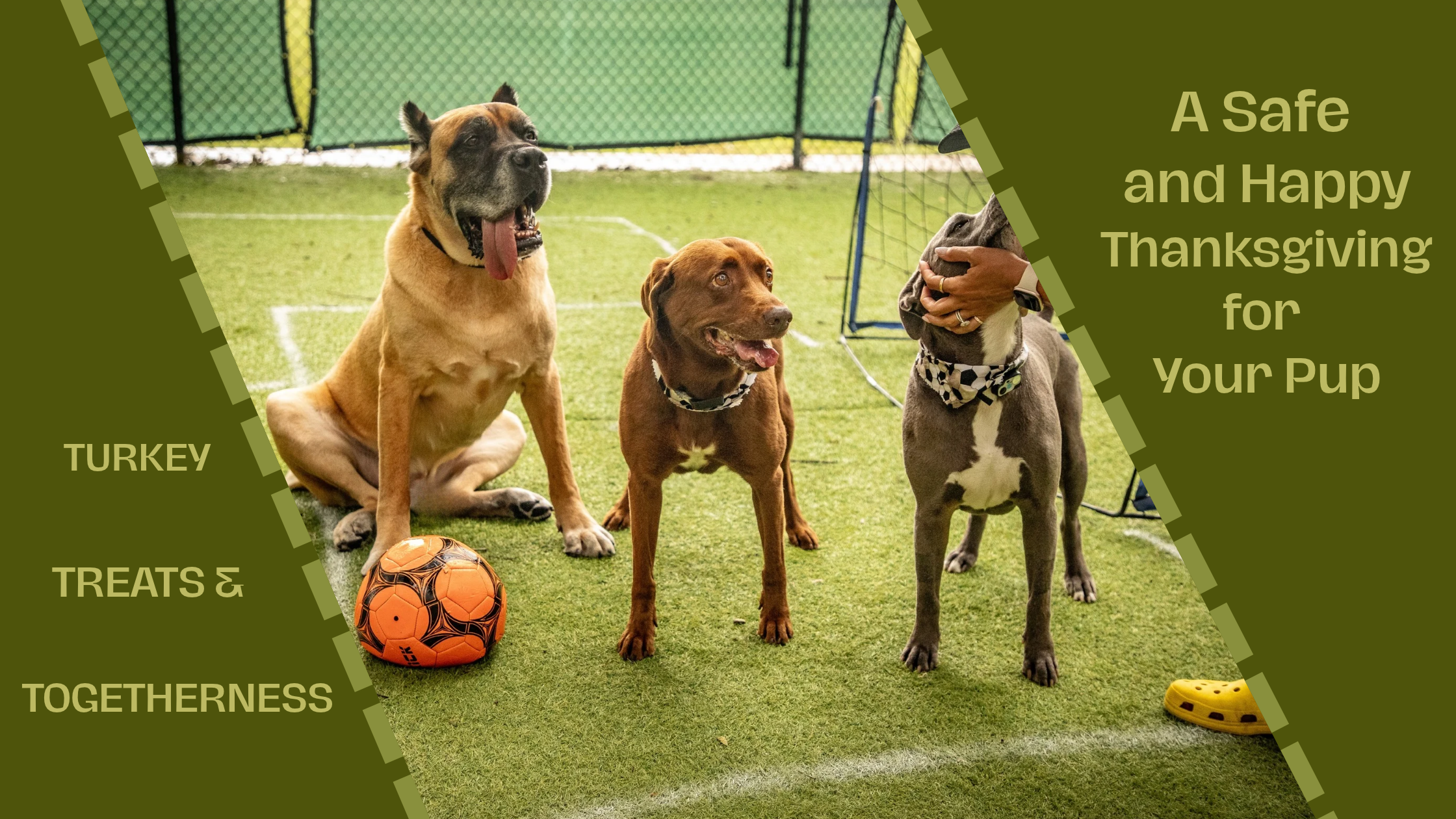
Thanksgiving blog banner reading “Turkey, Treats & Togetherness: A Safe and Happy Thanksgiving for Your Pup,” featuring three dogs in an outdoor play area at Jazz’s Wonderland.
A Dog-Friendly Thanksgiving: What to Share, What to Avoid & How to Keep Your Pup Happy
Thanksgiving is a time for family, gratitude, delicious food, and making memories with the people we love.
And for many families here in Gainesville, Florida, that includes our four-legged family members.
Between the smell of roasted turkey, the excitement of arriving guests, and all those delicious dishes on the table, Thanksgiving can be an exciting day for dogs.
But it can also bring unexpected health risks, changes in routine, and overwhelming social situations.
While we want our pups to feel included in the festivities, some of our favorite Thanksgiving traditions aren't necessarily good for them.
The good news? With a little preparation, you can create a celebration that's enjoyable for everyone, including your dog.
At Jazz’s Wonderland, we believe that including our dogs in family celebrations means understanding their needs, respecting their boundaries, and making choices that support their health and happiness.
Here's how to make your Thanksgiving a truly dog-friendly celebration.
Can Your Dog Enjoy Thanksgiving Dinner Too?
It's hard to resist those puppy eyes when you're sitting down to a delicious Thanksgiving meal.
Your dog may be watching every bite, hoping that something will magically fall from the table.
And while sharing food can feel like an expression of love, not everything on our Thanksgiving menu belongs in a dog's bowl.
The biggest difference between a dog-friendly Thanksgiving meal and a traditional Thanksgiving dinner is often how the food is prepared.
Many ingredients that are perfectly appropriate for dogs on their own become unsuitable when combined with butter, salt, sugar, seasonings, sauces, or other ingredients.
A plain sweet potato, for example, is very different from a sweet potato casserole topped with butter, sugar, and marshmallows.
The secret is keeping things simple.
Thanksgiving Foods You Can Share With Your Dog
If your dog is healthy and doesn't have dietary restrictions, some traditional Thanksgiving ingredients can be offered as occasional treats when prepared appropriately.
Plain Turkey Meat
Turkey can be a good source of protein for dogs.
If you'd like to share some, choose a small portion of fully cooked, boneless, skinless turkey breast without seasoning.
Avoid turkey prepared with garlic, onions, excessive salt, butter, marinades, or rich sauces.
Set aside your dog's portion before adding seasonings whenever possible.
Plain Pumpkin
Plain, cooked pumpkin or 100% pure canned pumpkin can be a tasty addition to your dog's regular diet in small amounts.
Pumpkin contains fiber and can be an enjoyable ingredient in dog-friendly enrichment activities.
However, pumpkin pie filling is not the same as plain pumpkin.
It may contain sugar, spices, and other ingredients that aren't appropriate for dogs.
Sweet Potatoes
Plain, fully cooked sweet potatoes can make a delicious occasional treat.
Serve them without butter, sugar, marshmallows, salt, or seasonings.
A few small, soft pieces are plenty for most dogs.
Green Beans
Plain green beans can be a crunchy or soft, low-calorie snack, depending on how they're prepared.
They should be served without added salt, butter, garlic, or sauces.
Traditional green bean casserole, however, should stay on the human side of the table.
Carrots
Plain carrots can be a fun treat for many dogs.
They can be served cooked or raw, provided they're cut into appropriately sized pieces to reduce choking risks.
Avoid glazed carrots prepared with sugar, butter, or other rich ingredients.
Apples
Small pieces of fresh apple can also be an occasional treat.
Remove the seeds, stem, and core before serving.
Apple pie, however, is a different story.
The added sugar, butter, and other ingredients make it unsuitable as a regular dog treat.
Remember that even dog-friendly foods should be offered in moderation. Thanksgiving treats shouldn't replace your dog's regular, nutritionally balanced meals.
If your dog has food allergies, diabetes, a history of pancreatitis, digestive sensitivities, or a prescribed veterinary diet, consult your veterinarian before introducing new foods.
Thanksgiving Food Guide: What's Safe and What's Not?
Here's a quick guide to help you decide what belongs in your dog's bowl.
Thanksgiving FoodDog-Friendly?Plain, boneless, skinless turkeyYes, in moderationPlain cooked pumpkinYes, in moderationPlain cooked sweet potatoesYes, in moderationPlain green beansYesPlain carrotsYes, appropriately sizedApple slices without seeds or coreYes, in moderationTurkey skinAvoidCooked turkey bonesNoStuffingNoGravyAvoidMashed potatoes with butter or seasoningAvoidGreen bean casseroleAvoidSweet potato casseroleAvoidCranberry sauceAvoidPumpkin pieAvoidChocolate dessertsNoGrapes and raisinsNoSugar-free desserts containing xylitolNoAlcoholNoRaw yeast doughNo
When in doubt, stick to your dog's usual food and treats.
Your pup doesn't need a traditional Thanksgiving dinner to feel included in the celebration.
Thanksgiving Foods That Should Never Reach Your Dog's Bowl
Some holiday foods may cause mild digestive discomfort.
Others can lead to serious, potentially life-threatening medical emergencies.
Knowing the difference is an important part of holiday preparation.
Cooked Turkey Bones
Giving your dog a turkey bone may seem like a natural way to include them in Thanksgiving dinner.
Unfortunately, cooked poultry bones can become brittle and splinter.
These fragments may cause:
Choking
Injuries to the mouth or throat
Gastrointestinal obstruction
Damage to the digestive tract
Intestinal perforation
Even large bones aren't necessarily safe.
Dispose of turkey bones in a secure trash container that your dog cannot access.
Onions, Garlic, Leeks, and Chives
These ingredients are commonly found in stuffing, gravy, casseroles, mashed potatoes, and seasoned meats.
They belong to the Allium family and can damage a dog's red blood cells, potentially leading to anemia.
Raw, cooked, dried, and powdered forms can all be harmful.
Garlic powder and onion powder are particularly easy to overlook because they're included in many seasoning blends.
Signs of toxicity may be delayed and can include weakness, lethargy, pale gums, and rapid breathing.
If you suspect your dog has eaten a potentially harmful amount, contact your veterinarian promptly.
Grapes and Raisins
Raisins can appear in stuffing, salads, breads, desserts, and other holiday recipes.
Both grapes and raisins can cause acute kidney injury in dogs.
The amount that causes toxicity is unpredictable, and there is no reliably established safe amount.
If your dog eats grapes or raisins, seek veterinary guidance immediately, even if they appear completely normal.
Chocolate
Chocolate desserts are a holiday favorite, but chocolate contains theobromine and caffeine, which can be toxic to dogs.
Dark chocolate, baking chocolate, and cocoa powder are particularly concerning because they contain higher concentrations of these substances.
Potential symptoms include vomiting, restlessness, an elevated heart rate, tremors, and seizures.
Don't wait for symptoms to appear before seeking professional guidance.
Xylitol
Some sugar-free desserts, candies, gums, and baked goods contain xylitol, which may also be listed as birch sugar.
Xylitol is extremely dangerous to dogs.
It can cause a rapid drop in blood sugar and, in some cases, severe liver injury.
Suspected xylitol ingestion requires immediate veterinary attention.
Alcohol
Wine, beer, cocktails, and desserts containing alcohol should always be kept away from dogs.
Even unattended glasses can present a risk.
Alcohol poisoning may cause vomiting, weakness, disorientation, breathing difficulties, and other serious complications.
Raw Yeast Dough
If you're baking homemade bread or dinner rolls, keep rising dough away from curious noses.
Raw yeast dough can expand inside a dog's stomach, causing painful and potentially dangerous distension.
The fermentation process can also produce alcohol, creating an additional risk of poisoning.
Keep dough in a secure location while it rises.
The Hidden Danger of Thanksgiving Leftovers: Pancreatitis
Not every dangerous Thanksgiving food contains a toxic ingredient.
Sometimes, the problem is simply that the food is too rich.
Turkey skin, gravy, bacon, butter, fatty meat trimmings, and rich casseroles can be difficult for dogs to tolerate.
High-fat meals may also trigger pancreatitis in susceptible dogs.
What Is Pancreatitis?
Pancreatitis is inflammation of the pancreas, an organ that plays an important role in digestion and blood sugar regulation.
The condition can range from mild to severe and may require hospitalization.
Although pancreatitis can have several causes, dietary indiscretion and high-fat meals are recognized risk factors.
Signs of Pancreatitis May Include:
Vomiting
Diarrhea
Loss of appetite
Abdominal pain
Lethargy
Dehydration
A hunched posture
Restlessness or difficulty getting comfortable
Some dogs experiencing abdominal pain may adopt what's known as a prayer position, with their front legs and chest lowered while their hindquarters remain elevated.
These symptoms aren't exclusive to pancreatitis, but they deserve veterinary attention.
Why Small Treats Can Add Up
Imagine that one family member gives your dog a piece of turkey skin.
Another shares a spoonful of mashed potatoes.
Someone else offers a bite of casserole.
And later, your dog manages to find a few leftovers under the table.
Each person may think they're only giving a tiny treat.
But together, those small portions can add up to a significant amount of unfamiliar, rich food.
This is especially concerning for small dogs and dogs with sensitive digestive systems.
Make sure everyone attending your Thanksgiving celebration understands what your dog can and cannot eat.
Don't Forget About the Thanksgiving Trash
The celebration may be over, but the risks don't necessarily end when dinner does.
In fact, the trash can may become one of the most tempting places in your home.
A Thanksgiving trash bag can contain:
Turkey bones
Fatty meat trimmings
Food packaging
Aluminum foil
Plastic wrap
Corn cobs
Cooking twine
Wooden skewers
Spoiled leftovers
Foods containing toxic ingredients
Some of these items can cause gastrointestinal obstruction or internal injuries.
Cooking twine, for example, may smell like turkey and be particularly tempting to a dog.
Corn cobs can also cause serious intestinal blockages if swallowed.
Use a secure trash container and avoid leaving garbage bags on the floor, near the back door, or anywhere your dog can investigate them.
The same applies to kitchen counters and unattended plates.
Even a dog who normally respects household boundaries may find Thanksgiving leftovers especially difficult to resist.
Create a Special Thanksgiving Meal Just for Your Pup
Want your dog to have something special while the family enjoys dinner?
You don't need to share food directly from the table.
Instead, create a small, dog-friendly Thanksgiving treat using ingredients your dog already tolerates.
Your Pup's Thanksgiving Bowl
Start with your dog's usual food and add a small amount of one or two appropriate ingredients:
Plain cooked turkey breast
Plain pumpkin purée
Plain cooked sweet potato
Chopped green beans
Small pieces of carrot
Keep the portions appropriate for your dog's size and dietary needs.
As a general guideline, treats and extras should make up no more than approximately 10% of a healthy dog's daily calorie intake, unless your veterinarian recommends otherwise.
For dogs with sensitive stomachs, sticking to familiar foods may be the better option.
Remember, your dog doesn't know that Thanksgiving dinner is supposed to be different.
They'll be just as happy enjoying a familiar favorite.
Turn Thanksgiving Treats Into Enrichment
At Jazz’s Wonderland, we're big believers in making treats more than just something dogs eat.
Food can also provide opportunities for mental stimulation, exploration, problem-solving, and relaxation.
Thanksgiving is a wonderful opportunity to create simple seasonal enrichment activities at home.
Pumpkin Lick Mat
Spread a thin layer of plain pumpkin purée onto a dog-safe lick mat.
You can also use a portion of your dog's regular wet food.
Licking can provide an engaging, relatively calm activity for many dogs.
Thanksgiving Snuffle Mat
Hide a portion of your dog's regular kibble or familiar treats inside a snuffle mat.
Allow them to use their nose to search for the food.
This provides mental stimulation without requiring an overly exciting environment.
Holiday Treasure Hunt
Hide a few dog-safe treats in accessible locations around a quiet room.
Encourage your dog to explore and find them at their own pace.
Stuffed Enrichment Toy
Fill an appropriately sized, dog-safe enrichment toy with your dog's usual food and a small amount of plain pumpkin or another familiar ingredient.
This can provide an engaging activity while the family enjoys dinner.
Always supervise enrichment activities as appropriate, especially when introducing a new toy.
If you have multiple dogs, provide food-based enrichment in separate spaces to reduce competition and potential resource guarding.
The goal isn't to give your dog more food. It's to make their existing food more interesting and rewarding.
Thanksgiving Through Your Dog's Eyes
Food isn't the only thing that changes during Thanksgiving.
Think about what the day might look like from your dog's perspective.
People arrive at unusual times.
The house smells different.
Furniture may be rearranged.
Children are running around.
Someone is cooking all day.
The door keeps opening.
Music, conversations, laughter, and unfamiliar voices fill the house.
And their normal routine may suddenly disappear.
For some dogs, this is exciting.
For others, it's exhausting.
Even dogs who enjoy visitors may find several hours of continuous social interaction overwhelming.
Being friendly doesn't mean wanting to socialize all day.
And being part of the family doesn't mean your dog needs to participate in every family activity.
How to Recognize When Your Dog Needs a Thanksgiving Break
Dogs often communicate discomfort long before they bark, growl, or snap.
Learning to recognize these early signals can help prevent stressful situations.
Watch for changes such as:
Repeated lip licking
Yawning when they're not tired
Pacing or restlessness
Excessive panting unrelated to heat or exercise
Turning their head or body away
Hiding behind furniture
Avoiding unfamiliar people
A tucked tail or tense posture
Freezing during interactions
Difficulty settling
Refusing familiar treats
Seeking out a quieter area
One behavior alone doesn't necessarily indicate stress.
Look at the overall situation and consider what's normal for your dog.
If your pup is repeatedly moving away from guests, they may be asking for space.
Respect that request.
Your dog shouldn't have to growl before someone understands that they've had enough.
Give Your Dog a Quiet Place to Retreat
One of the most thoughtful things you can do before Thanksgiving guests arrive is prepare a comfortable resting area for your dog.
This could be a quiet bedroom, a familiar crate they already enjoy using, or another secure space away from the busiest part of the house.
Include familiar comforts such as:
Their favorite bed or blanket
Fresh drinking water
A familiar toy
An appropriate enrichment activity
Soft background music or white noise, if helpful
Make sure guests understand that this area is your dog's personal space.
Children shouldn't follow your dog into their resting area, climb into their crate, or disturb them while they're sleeping.
Your dog may choose to spend only a few minutes there.
Or they may prefer to relax away from the celebration for most of the afternoon.
Both are perfectly acceptable.
At Jazz’s Wonderland, we recognize that rest is an important part of a dog's well-being.
More stimulation doesn't always mean more happiness.
Sometimes, what your dog needs most is a comfortable place to take a nap.
Helping Children and Dogs Enjoy Thanksgiving Safely
Thanksgiving often brings together family members of different ages.
For dogs who don't regularly spend time around children, the sudden excitement can be challenging.
Children may move quickly, speak loudly, hug dogs, reach for toys, or approach while a dog is eating.
Even when their intentions are affectionate, these interactions may make a dog uncomfortable.
Help children understand a few important rules:
Always ask before approaching or petting a dog.
Allow the dog to approach voluntarily.
Don't hug, climb on, or chase dogs.
Don't disturb dogs while they're eating or sleeping.
Don't take food, toys, or chews away from a dog.
Don't feed dogs without an adult's permission.
Give dogs space when they move away.
Interactions between children and dogs should always be appropriately supervised by an attentive adult.
If active supervision isn't possible, use a secure barrier or separate space.
Teaching children to respect a dog's boundaries is a wonderful way to encourage empathy and responsible relationships with animals.
Keep an Eye on Doors, Gates, and Visitors
With family members arriving and leaving throughout the day, exterior doors may remain open longer than usual.
A dog may slip outside while someone carries groceries into the house, greets a guest, or says goodbye.
Even dogs with excellent recall can react unexpectedly when startled or excited.
Before the celebration begins, make sure your dog's identification tag and microchip registration information are current.
Check that gates and fences are secure.
Ask visitors to be mindful when opening exterior doors.
If your dog becomes particularly excited when people arrive, consider keeping them in a secure area during arrivals and departures.
A few simple precautions can help prevent a holiday celebration from turning into a stressful search for a missing pet.
Keep Some of Your Dog's Normal Routine
Dogs often find comfort in predictability.
While Thanksgiving may change your family's schedule, maintaining a few familiar routines can help your pup feel more secure.
Try to preserve their usual feeding times, bathroom breaks, exercise opportunities, and resting periods.
A morning walk can be a wonderful way to start the holiday together.
Allow your dog plenty of time to sniff and explore rather than focusing exclusively on physical exercise.
Later in the day, provide opportunities for rest and quiet activities.
Here in North Central Florida, Thanksgiving weather can still be relatively warm.
If you're spending time outdoors, pay attention to the temperature, provide fresh water, and adjust activity to your dog's individual needs.
A tired dog isn't automatically a relaxed dog.
The goal is a healthy balance of physical activity, mental stimulation, social interaction, and rest.
What to Do If Your Dog Eats Something Dangerous
Even with careful preparation, accidents can happen.
If you suspect your dog has eaten a toxic food, cooked bone, foreign object, or another potentially dangerous substance, contact a veterinary professional promptly.
Try to gather the following information:
What your dog ate
Approximately how much they consumed
When the incident occurred
Your dog's approximate weight
Any symptoms you've noticed
Keep food packaging or ingredient lists when available.
Don't induce vomiting unless specifically instructed by a veterinarian or animal poison control professional.
Don't administer home remedies or human medications without professional guidance.
When Should You Seek Emergency Veterinary Care?
Warning signs that require urgent attention may include:
Repeated vomiting
Severe abdominal pain
A swollen abdomen
Repeated attempts to vomit without producing anything
Difficulty breathing
Tremors or seizures
Collapse
Severe weakness
Pale gums
Significant changes in responsiveness
Remember that some toxic exposures require immediate attention even before symptoms develop.
Animal Poison Control Resources
Keep these U.S. emergency resources accessible during the holidays:
ASPCA Animal Poison Control Center
(888) 426-4435
Pet Poison Helpline
(855) 764-7661
Consultation fees may apply.
It's also a good idea to confirm your veterinarian's holiday hours and identify an emergency veterinary hospital in advance.
Create Thanksgiving Traditions Your Dog Can Actually Enjoy
Thanksgiving isn't just about food.
It's about spending time together and appreciating the relationships that make our lives meaningful.
And there are plenty of ways to include your dog without sharing a plate of leftovers.
Take a Thanksgiving Morning Walk
Enjoy a peaceful walk before the cooking and celebrations begin.
Let your dog sniff, explore, and enjoy the environment at their own pace.
Create a Seasonal Enrichment Activity
Prepare a dog-friendly treasure hunt, puzzle toy, or lick mat using familiar ingredients.
Take a Family Photo
If your dog enjoys being involved, include them in a family photograph.
Keep the experience short and comfortable.
There's no need for costumes or accessories if your dog doesn't enjoy wearing them.
Give Your Dog Some Undivided Attention
Between cooking, cleaning, and entertaining guests, it can be easy to overlook the quieter members of the family.
Take a few minutes to sit with your dog, play their favorite game, or simply enjoy each other's company.
Start a Gratitude Tradition
Invite each family member to share something they appreciate about your dog.
Maybe it's the enthusiastic greeting at the end of a long day.
The companionship during difficult moments.
The motivation to spend more time outdoors.
Or the ability to make everyone laugh without saying a single word.
Our dogs give us countless reasons to be thankful.
And none of them require a seat at the Thanksgiving table.
What If Your Thanksgiving Plans Include Traveling?
For some families, Thanksgiving means traveling, visiting relatives, or spending several days away from home.
Not every dog enjoys long car rides, unfamiliar houses, crowded gatherings, or changes in their sleeping environment.
For dogs who are already comfortable with a boarding facility, spending the holiday in a familiar care environment may be a suitable alternative.
At Jazz’s Wonderland, we encourage families to introduce their dogs to daycare before an overnight boarding stay whenever possible.
This gives them an opportunity to become familiar with the environment, the people caring for them, and the daily routine.
Every dog is different.
Some enjoy social activities and group play. Others benefit from quieter experiences, individual attention, and additional opportunities to rest.
Understanding those differences helps us support each dog's individual needs.
As Thanksgiving gives way to Christmas and New Year's celebrations, it's worth considering what holiday arrangements will work best for your pup.
Including your dog in your holiday plans doesn't necessarily mean taking them everywhere.
It means making thoughtful decisions about their comfort, safety, and happiness.
Your Dog-Friendly Thanksgiving Checklist
Before the festivities begin, take a moment to make sure you're prepared.
Food Safety
Set aside any dog-friendly food before adding seasonings.
Keep turkey bones, skin, and fatty leftovers out of reach.
Keep chocolate, grapes, raisins, onions, garlic, and xylitol away from your dog.
Secure trash cans and food packaging.
Remind guests not to feed your dog without permission.
Keep treats small and appropriate for your dog's dietary needs.
Comfort and Emotional Well-Being
Maintain your dog's regular feeding and bathroom schedule.
Prepare a quiet resting area.
Provide fresh drinking water.
Plan a familiar enrichment activity.
Supervise interactions with children.
Allow your dog to move away from unwanted interactions.
Give your dog plenty of opportunities to rest.
Home and Emergency Safety
Check identification tags and microchip registration.
Make sure doors, fences, and gates are secure.
Confirm your veterinarian's holiday hours.
Save emergency veterinary and animal poison control contact information.
A little preparation can make a big difference.
This Thanksgiving, We're Thankful for Paws
Our dogs may not understand the meaning of Thanksgiving.
They don't know why we're roasting a turkey, setting a special table, or gathering with family.
But they understand many of the things that make Thanksgiving meaningful.
Companionship.
Comfort.
Familiar faces.
Shared experiences.
Feeling safe.
And being loved.
At Jazz’s Wonderland, we're grateful for the opportunity to care for so many wonderful dogs and to be part of the lives of their families.
We're thankful for the shy pups who slowly learn to trust us.
The playful pups who bring endless energy to our days.
The senior dogs who remind us to appreciate the quieter moments.
The friendships that form in our playgroups.
And the pet parents who trust us with such important members of their families.
This Thanksgiving, remember that showing love to your dog doesn't have to involve sharing everything on your plate.
Sometimes, love means saying no to a piece of turkey skin.
Sometimes, it means giving them space when the house becomes too busy.
Sometimes, it means choosing a quiet walk instead of another exciting activity.
And sometimes, it simply means being there.
The best Thanksgiving gift you can give your dog is a celebration where they feel safe, comfortable, understood, and loved.
From our Jazz’s Wonderland family to yours, we wish you a wonderful, safe, and happy Thanksgiving!
Planning your Christmas or New Year's getaway? Schedule a meet & greet at Jazz’s Wonderland in Gainesville, Florida, and help your pup become familiar with their home away from home before the next holiday adventure.