
Understanding Your Dog: What Changes in Behavior May Be Trying to Tell You
Blue-themed blog banner featuring a close-up photo of a small gray-and-white dog resting its head on a low wall beside a fence. The dog appears calm and observant. In the center, the text reads “Understanding your dog,” framed by heart-shaped paw print icons. The background includes shades of blue and a repeating bone pattern, emphasizing pet care, observation, and understanding canine behavior.
As pet parents, we often become experts at recognizing our dogs’ favorite toys, preferred treats, and daily routines. But one of the most important skills we can develop is learning to recognize the subtle ways dogs communicate when something isn’t quite right.
Unlike people, dogs cannot tell us when they feel uncomfortable, anxious, sore, stressed, or unwell. Instead, they communicate through changes in their behavior, body language, energy levels, and habits.
The challenge is that many of these signs are easy to overlook because they happen gradually or can be mistaken for normal aging, tiredness, or personality quirks.
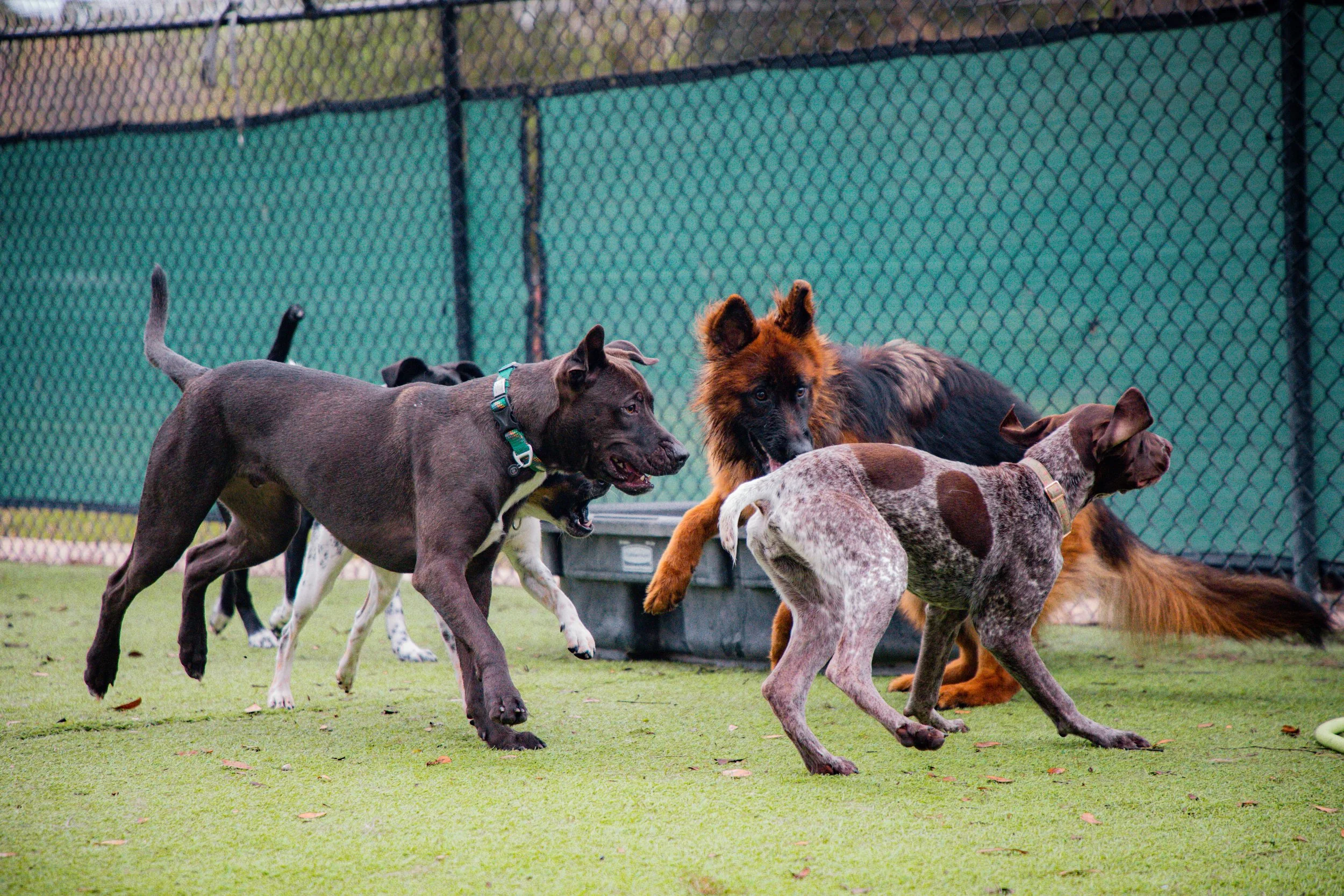
Several dogs of different breeds engage in supervised group play in an outdoor daycare area with artificial grass and secure fencing. A brown dog, a spotted pointer-type dog, and a long-haired shepherd-type dog interact with relaxed, playful body language while other dogs move nearby. The image illustrates healthy socialization, communication, and structured play among dogs in a monitored setting.
At Jazz’s Wonderland, we spend every day observing dogs in different situations—during play, rest, enrichment activities, daycare, boarding, and grooming appointments. Often, the earliest indicators that a dog needs support are small behavioral changes rather than obvious symptoms.
Learning to recognize these changes can help you address potential concerns early and ensure your dog stays healthy, comfortable, and happy.
Dogs Communicate Through Behavior
Every dog has a unique personality, but most dogs establish consistent patterns.
You know when your dog usually:
Greets you enthusiastically
Eats meals eagerly
Wants to play
Enjoys walks
Seeks affection
Sleeps and rests
Because these patterns become familiar, even small deviations can be meaningful.
The key isn't looking for dramatic symptoms.
It's noticing when your dog behaves differently than they normally would.
Changes in Appetite
One of the first signs many pet parents notice is a change in eating habits.
Possible Signs
Leaving food behind
Eating more slowly
Refusing favorite treats
Suddenly becoming unusually hungry
Showing interest in food but not eating
What It Might Mean
Appetite changes can be associated with:
Dental discomfort
Digestive issues
Pain
Stress or anxiety
Medication side effects
Illness
For example, a dog experiencing dental pain may approach their food bowl eagerly but stop after a few bites because chewing hurts.
A normally food-motivated dog suddenly refusing treats is often worth paying attention to.
Lower Energy Levels
Every dog has lazy days. But persistent fatigue can signal that something deserves a closer look.
Possible Signs
Sleeping significantly more than usual
Losing interest in play
Lagging behind on walks
Reluctance to participate in favorite activities
Needing longer recovery after exercise
What It Might Mean
Reduced energy can result from:
Illness
Pain
Arthritis
Heat stress
Poor sleep quality
Emotional stress
Sometimes pet parents assume their dog is "just getting older," when discomfort or a treatable medical issue may actually be responsible.
Avoiding Interaction
Dogs are social animals, but social preferences can change when they're uncomfortable.
Possible Signs
Choosing to be alone
Moving away when touched
Avoiding family members
Less interest in greeting people
Reduced interest in play with other dogs
What It Might Mean
Withdrawal may indicate:
Pain
Anxiety
Illness
Fatigue
Overstimulation
Stress
For instance, a dog with sore hips may avoid interaction simply because physical contact feels uncomfortable.
Excessive Panting
Panting is normal after exercise or during warm weather.
However, excessive panting deserves attention.
Possible Signs
Heavy panting indoors
Panting while resting
Panting long after activity has ended
Increased drooling along with panting
What It Might Mean
Potential causes include:
Heat stress
Pain
Anxiety
Medication effects
Respiratory issues
Medical emergencies
Because dogs primarily regulate body temperature through panting, changes in breathing patterns should never be ignored.
Limping, Stiffness, or Reluctance to Move
Not all mobility issues present as an obvious limp.
Possible Signs
Difficulty standing up
Hesitation before jumping
Slower stair climbing
Stiff movement after naps
Favoring one side
What It Might Mean
These changes can indicate:
Muscle soreness
Joint discomfort
Arthritis
Minor injuries
More significant orthopedic concerns
Dogs often adapt remarkably well to discomfort, making these subtle changes easy to miss.
Changes in Body Language
Dogs communicate constantly through posture and expression.
Watch For:
Tail carried lower than normal
Flattened ears
Increased tension
Excessive lip licking
Yawning when not tired
Avoiding eye contact
Trembling
What It Might Mean
These signals often suggest:
Stress
Anxiety
Uncertainty
Fear
Physical discomfort
Body language frequently changes before more obvious symptoms appear.
Loss of Interest in Favorite Activities
A dog that suddenly loses enthusiasm for things they normally enjoy may be trying to communicate something important.
Examples
No longer bringing toys
Avoiding fetch
Less excitement for walks
Ignoring favorite games
Reduced engagement during enrichment activities
Possible Causes
Pain
Illness
Fatigue
Emotional stress
Changes in routine
When motivation changes, it's often worth asking why.
Changes in Bathroom Habits
Bathroom routines offer valuable clues about overall health.
Possible Signs
Increased urination
Accidents indoors
Changes in stool consistency
Straining
Increased thirst
What It Might Mean
Changes may indicate:
Digestive issues
Urinary concerns
Hormonal conditions
Medication side effects
Other medical problems
These changes should be discussed with your veterinarian if they persist.
Sudden Behavior Changes
One of the most important signs to watch for is any behavior that seems out of character.
Examples
Increased irritability
Unusual clinginess
Restlessness
Vocalization
Increased reactivity
Difficulty settling
Why It Matters
Behavior changes are often a dog's way of communicating that something feels different.
Many medical conditions first appear as behavioral changes before physical symptoms become obvious.
Context Matters
Not every change indicates a problem.
A dog may be tired after a busy weekend, eat less during hot weather, or become temporarily quieter after a major life change.
The key is to look for:
✔ Changes that persist
✔ Multiple changes occurring together
✔ Behavior that is unusual for your specific dog
Knowing your dog's normal patterns makes it easier to recognize when something deserves attention.
Observation Is One of the Best Forms of Care
You don't need veterinary training to help protect your dog's health.
Simply paying attention to daily habits can provide valuable information.
Notice:
How they eat
How they move
How they sleep
How they interact
How they respond to activities they usually enjoy
Small observations often lead to early intervention—and early intervention can make a significant difference.
At Jazz's Wonderland, We Pay Attention Too
Whether a dog is visiting us for daycare, boarding, enrichment, grooming, or a spa service, observation is an important part of our care philosophy.
We get to know each dog's normal behavior and routines, which helps us recognize when something seems different.
While we're not veterinarians, we believe communication matters. If we notice meaningful changes in a dog's behavior, energy level, mobility, appetite, or social engagement while in our care, we'll always share our observations with pet parents.
Because understanding your dog isn't about looking for problems.
It's about noticing the small signals they give us every day—and responding with the care, attention, and support they deserve.